Course Overview
Umoja and the Basis of Black Student Achievement is a foundational Umoja Global Institute course for educators committed to transforming the educational experiences and outcomes of Black college students. This course names the problem clearly: inequity in higher education is not simply a “gap” in student ability—it is a socio-historical, cultural, and institutional pattern of misorientation, harm, and alienation that can be interrupted through deliberate practice.
Participants examine how schooling has been racialized across history and how deficit mindsets, cultural mismatch, and institutional design shape belonging, identity development, and academic outcomes. From that grounding, the course equips educators to operationalize Umoja’s approach: African-centered educational traditions, Black intellectual legacies, and the Umoja Practices as a methodology for teaching, counseling, and program practice.
By the end, participants will not only understand why Umoja works—they will be prepared to apply culturally sustaining, self-affirming approaches that build self-efficacy and strengthen Black student persistence, completion, and transfer.
What You’ll Learn
- How socio-historical forces shaped inequitable higher education conditions—and how those conditions show up today in policy, practice, and outcomes
- How African-centered education and Black intellectual traditions function as a counter-frame to cultural misorientation and deficit narratives
- How to apply Umoja’s theory of change: intentionally recognizing student voices and histories to cultivate self-efficacy
- How to operationalize the Umoja Practices in day-to-day educator and practitioner roles
- How educator mindsets and behaviors affect Black student self-concept, engagement, and achievement—and what to do differently
- How to use an Umoja-aligned rubric lens (with case examples) to evaluate practice and recommend improvements
Course Arc (4 Modules)
- Module 1 – The Need for Systemic Change in Education: socio-historical landscape of education, systemic barriers, the founding purpose of Umoja, and the case for culturally grounded transformation
- Module 2 – Prioritizing Connection to the African Diaspora: Black intellectual traditions, African-centered education principles, and tools for building learning environments responsive to the African diaspora
- Module 3 – Our Method, The Umoja Practices: the Umoja Practices as the operational approach—cultural significance, domains of practice, and using practices as a barometer for success
- Module 4 – Activating Umoja Instructors as Change Agents: expectations of Umoja practitioners, authority + authenticity, educator impact on students, and evaluation using a rubric/case lens
Who Should Enroll
- Faculty (discipline faculty, Umoja faculty, basic skills, transfer-level, honors/AP backgrounds)
- Counselors, advisors, and student support practitioners
- Equity, Black Student Success, and culturally centered program leaders
- Deans, program managers, coordinators, and instructional leaders
- Educators seeking African-centered frameworks for culturally sustaining practice
Instructor
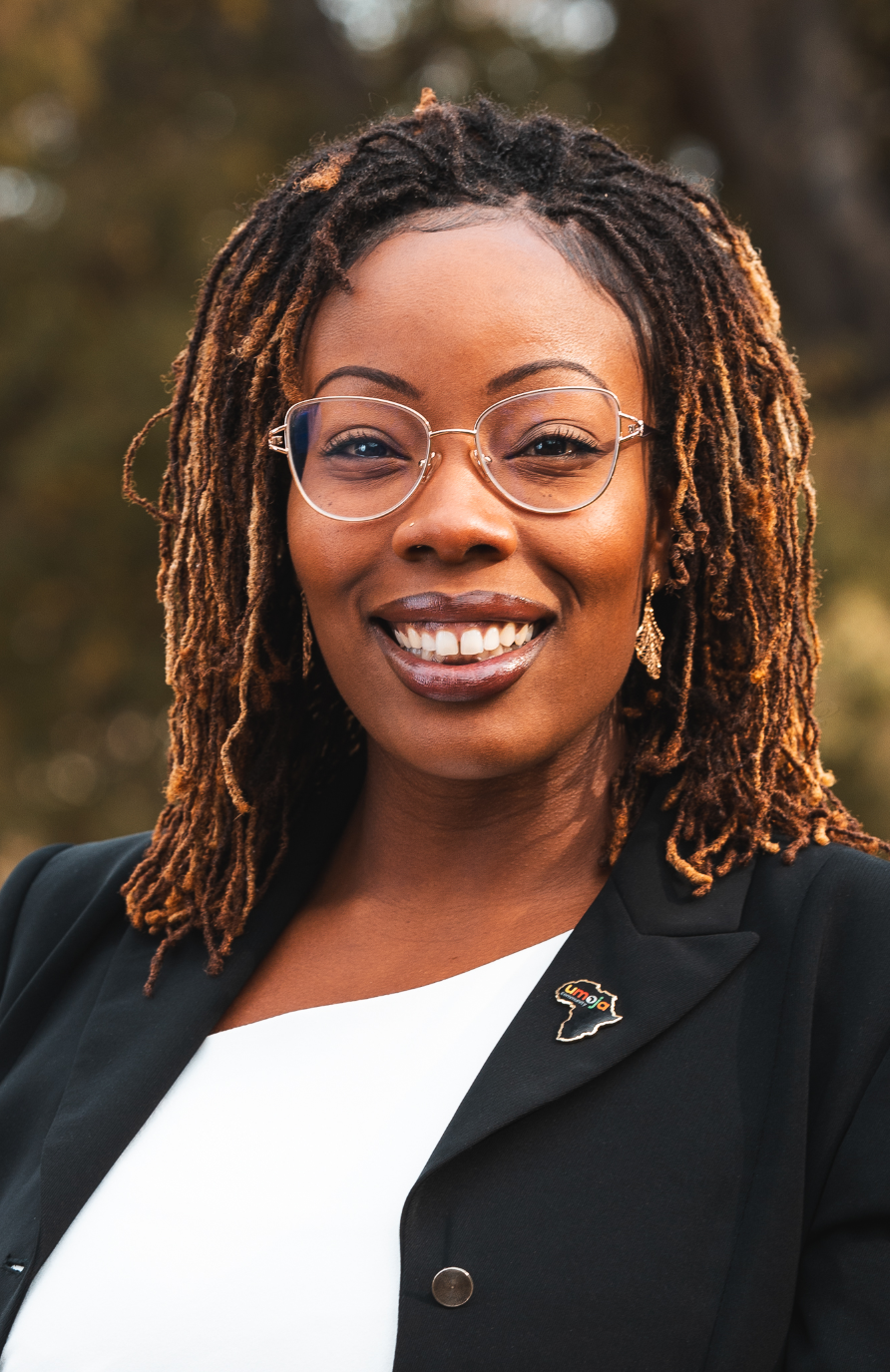
Myia Clarisse Williams, M.A.Ed.
Director of Curriculum and Instruction, Umoja Community Education Foundation
Professor Williams is the Director of Curriculum and Instruction at the California state office of the Umoja Community Education Foundation, where she preserves the Black intellectual tradition through African-centered teaching and training. She has dedicated the majority of her working career to uplifting African cultural morals and values and building positive concepts for and representations of Black identity. Through years of study, struggle, and lived experience, she has learned that unity is a critical key in the development of a people, and so she seeks to unify the African Diaspora through teachings of love, history, self-awareness, and collective responsibility. Her biggest responsibility has been (and will always be) "to continue the work our Ancestors started."
Professor Williams has worked to advance Black student success in a variety of settings, and she has numerous favorable student evaluations of her teaching and service. From the playground to the lecture hall; from advanced placement (AP) and honors classes to Special Education classrooms for neurodivergent and emotionally disturbed (ED) populations; from after-school programs to first-year graduate students; from local convenings to international conferences— Myia C. Williams continues to explore the needs around Black student education while working to raise levels of understanding, intentionality, and accountability amongst educators, families, and students.